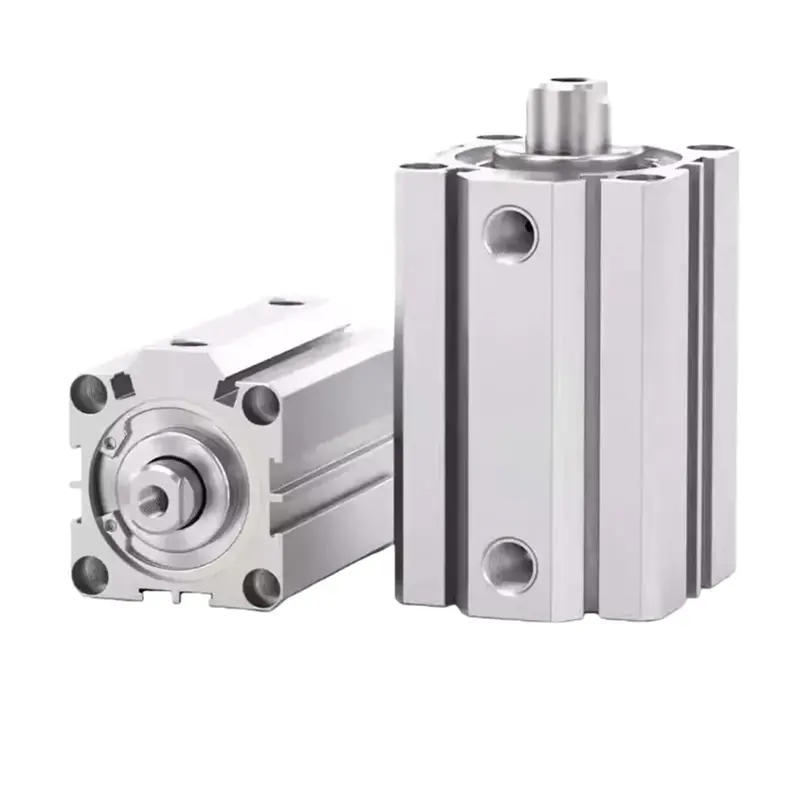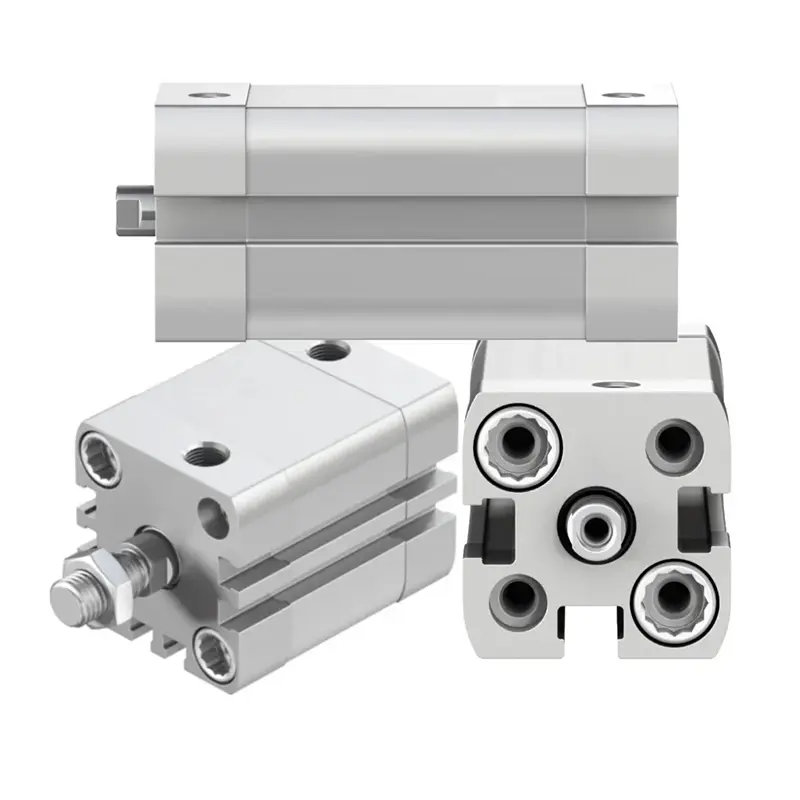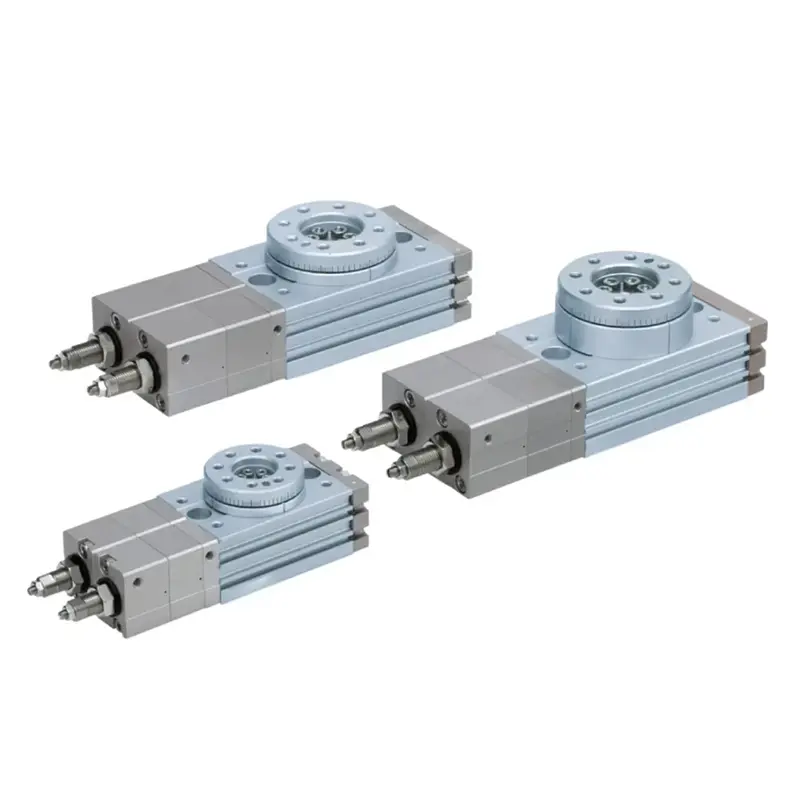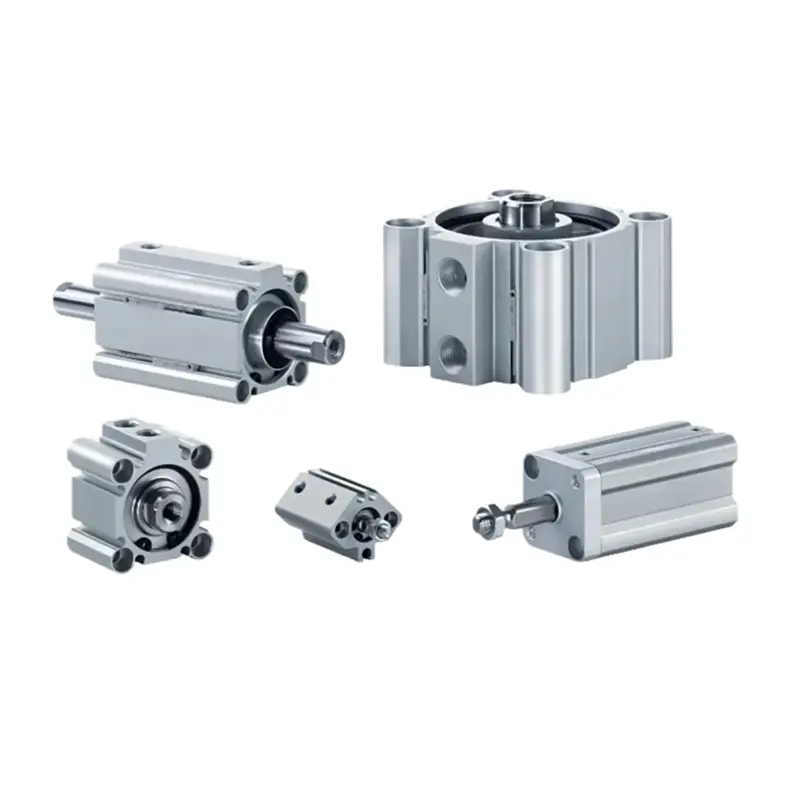
In contemporary industrial automation, pneumatic slides are employed wherever there is a need for compact, stable, and precise linear motion. In PCB assembly machines, packaging machines, and robotic handling units, pneumatic slides serve as a rigid and space-efficient alternative to conventional air cylinders.
But how does a pneumatic slide actually work?
And when should you opt for a pneumatic slide over a conventional cylinder or electric actuator?
This article will cover the working principle, design, application, technical specifications, and expert selection criteria of a pneumatic slide, as a manufacturer of pneumatic components.
1. What Is a Pneumatic Slide?
A pneumatic slide—also known as a pneumatic slide table, guided pneumatic cylinder, or air slide actuator—is a compact linear actuator that integrates:
- A pneumatic cylinder (power unit)
- A built-in guide mechanism (guide rods or linear rails)
- A rigid slide table platform
Unlike a standard air cylinder that relies only on its piston rod to support loads, a pneumatic slide features integrated guidance and structural reinforcement, enabling it to:
- Resist lateral forces
- Handle eccentric loads
- Maintain alignment during motion
Simple Definition
A pneumatic slide converts compressed air energy into controlled linear motion while maintaining structural stability under side loads.
This integrated design reduces installation complexity and improves repeatability in automation systems.
2. How Do Pneumatic Slides Work?
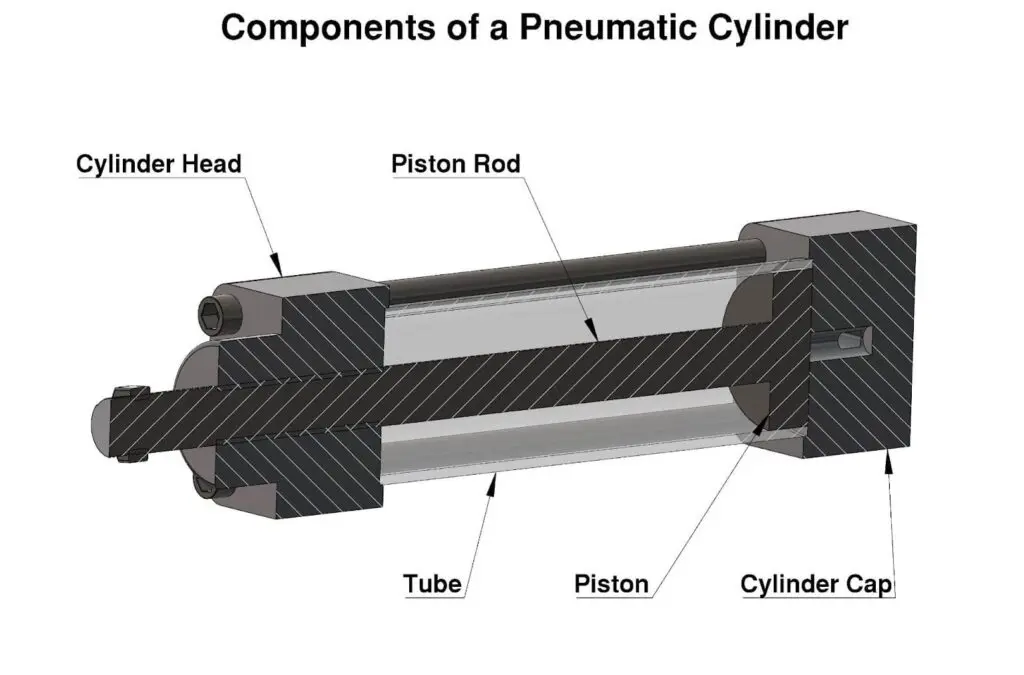
The operating principle is based on pneumatic pressure acting on a piston—similar to a conventional cylinder—but with synchronized guided motion.
Step 1: Air Supply
Compressed air enters the cylinder chamber through a solenoid valve.
Step 2: Piston Movement
Air pressure pushes the piston forward (or backward in double-acting models), generating thrust.
Step 3: Guided Linear Motion
The piston rod is connected to a slide table, which moves along:
- Dual precision guide rods
or - Linear guide rails
The guide mechanism absorbs lateral forces and prevents rod deflection.
Step 4: Exhaust & Return
When airflow reverses, the piston retracts and the slide returns to its starting position.
Why Guidance Matters
With a standard cylinder:
- Side loads can cause bending
- External guides increase footprint
- Alignment becomes installation-sensitive
A pneumatic slide solves these issues by integrating guidance into one compact module.
3. Main Components of a Pneumatic Slide
| Component | Function |
|---|---|
| Cylinder body | Generates thrust from compressed air |
| Piston & rod | Converts air pressure into motion |
| Guide rods / linear rail | Resist side loads & maintain alignment |
| Slide table | Mounting platform for workpiece |
| End caps | House seals & air ports |
| Cushioning mechanism | Reduces end-of-stroke impact |
High-quality pneumatic slide tables typically use:
- Hardened steel guide shafts
- Precision linear bearings
- Wear-resistant sealing systems
4. Common Types of Pneumatic Slides
Selecting the correct structure is critical for performance.
1. Dual-Rod Guided Pneumatic Slide
- Parallel guide rods
- Good anti-rotation performance
- Cost-effective for general automation
2. Linear Rail Type Slide Table
- Higher rigidity
- Better moment load capacity
- Suitable for precision assembly
3. Compact Guided Cylinder
- Short body length
- Ideal for space-limited installations
4. Cross-Roller Guide Slide
- Higher repeatability
- Used in precision positioning systems
Different structures provide different load capacities and repeatability levels.
5. Application Fields
Pneumatic slides are widely used in:
Electronics Manufacturing
- PCB transfer systems
- Micro-component positioning
- Test fixture actuation
Packaging Automation
- Product sorting
- Labeling modules
- Carton positioning
Medical & Laboratory Equipment
- Small part handling
- Automated test systems
Automotive Production
- Sensor alignment
- Sub-assembly positioning
They are particularly effective in high-speed, high-cycle, repetitive tasks.
6. Technical Parameters to Consider
Proper selection requires more than just choosing stroke length.
1. Bore Size (Thrust Calculation)
Force (N) = Pressure (Pa) × Effective Piston Area (m²)
Always apply a safety factor of 1.5–2.0 for dynamic conditions.
2. Stroke Length
Common range:
10 mm – 200 mm (custom strokes available)
3. Operating Pressure
Typical industrial range:
0.1 – 1.0 MPa
4. Load & Moment Capacity
Engineers must evaluate:
- Horizontal load
- Vertical load
- Overhang distance
- Moment load (Mx / My / Mz)
Ignoring moment load is one of the most common causes of premature failure.
5. Repeatability
Typical repeatability ranges from:
±0.02 mm to ±0.05 mm
(depending on guide type, load condition, and installation accuracy)
7. Pneumatic Slides vs Standard Air Cylinders
| Feature | Pneumatic Slide | Standard Cylinder |
|---|---|---|
| Built-in guidance | Yes | No |
| Side load resistance | High | Low |
| Installation footprint | Compact | Larger with external guide |
| Structural rigidity | High | Moderate |
| Cost | Slightly higher | Lower |
If your application includes lateral forces or eccentric loads, a pneumatic slide is generally the safer choice.
8. Pneumatic Slides vs Electric Linear Actuators
| Parameter | Pneumatic Slide | Electric Actuator |
|---|---|---|
| Speed | Very high | Moderate |
| Position control | On/Off | Programmable |
| Maintenance | Simple | More complex |
| Initial cost | Lower | Higher |
| Harsh environments | Suitable | Limited |
For programmable multi-point positioning, electric actuators are preferred.
For fast repetitive movement and cost-sensitive automation, pneumatic slides remain highly competitive.
9. Common Selection Mistakes
From real-world application experience, common errors include:
- Undersizing bore diameter for vertical loads
- Ignoring eccentric mounting distance
- Selecting bush-type guides for precision tasks
- Neglecting compressed air quality
- Underestimating cycle rate impact
Correct early selection significantly extends service life.
10. Installation & Maintenance
To maximize lifespan:
- Use clean, dry compressed air (FRL units recommended)
- Ensure flat mounting surfaces
- Inspect guide components periodically
- Replace worn seals in time
- Avoid excessive external side loads
Proper air preparation alone can dramatically improve durability.
FAQ
A pneumatic slide includes an integrated guide mechanism to handle side loads.
Rodless cylinders save space but may require external guidance when lateral forces are present.
Yes. Gravity load must be included in thrust calculation, and a larger bore may be required.
They offer reliable repeatability for industrial automation.
For servo-level programmable positioning, electric actuators are more suitable.
With proper air quality and correct load selection, pneumatic slides can operate for several million cycles.
Need Help Selecting the Right Pneumatic Slide?
Selecting the correct pneumatic slide table involves more than choosing bore size. Guide structure, moment load, stroke length, and cycle frequency all affect long-term reliability.
If you are designing an OEM system or upgrading automation equipment, engineering support can help prevent oversizing, premature wear, or unnecessary cost.
Contact our technical team for:
- Thrust & load calculation support
- Guide type recommendation
- Custom stroke configuration
- OEM integration advice
Conclusion
Pneumatic slides integrate actuation and guidance into a compact, rigid structure designed for modern automation systems.
Compared with standard cylinders, they provide:
- Higher structural stability
- Better resistance to lateral loads
- Improved repeatability
- Reduced installation complexity
For high-cycle, high-speed industrial applications, pneumatic slides remain one of the most practical and cost-effective linear motion solutions available.