Pneumatic Actuator Force Calculator
A Practical Engineering Guide by CHDAC
Industrial automation relies heavily on pneumatic actuators for fast, reliable, and cost-effective motion control. From packaging lines to robotic systems, air-powered actuators remain one of the most widely used motion technologies in manufacturing.
In this guide, we’ll explain:
- What pneumatic actuators are
- How they work
- The different types available
- How to select the right one
- Common selection mistakes to avoid
Whether you’re an equipment manufacturer, automation integrator, or industrial buyer, this article will help you make informed decisions.
What Is a Pneumatic Actuator?
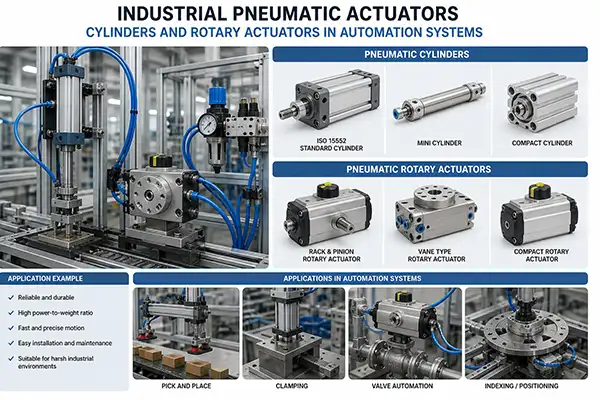
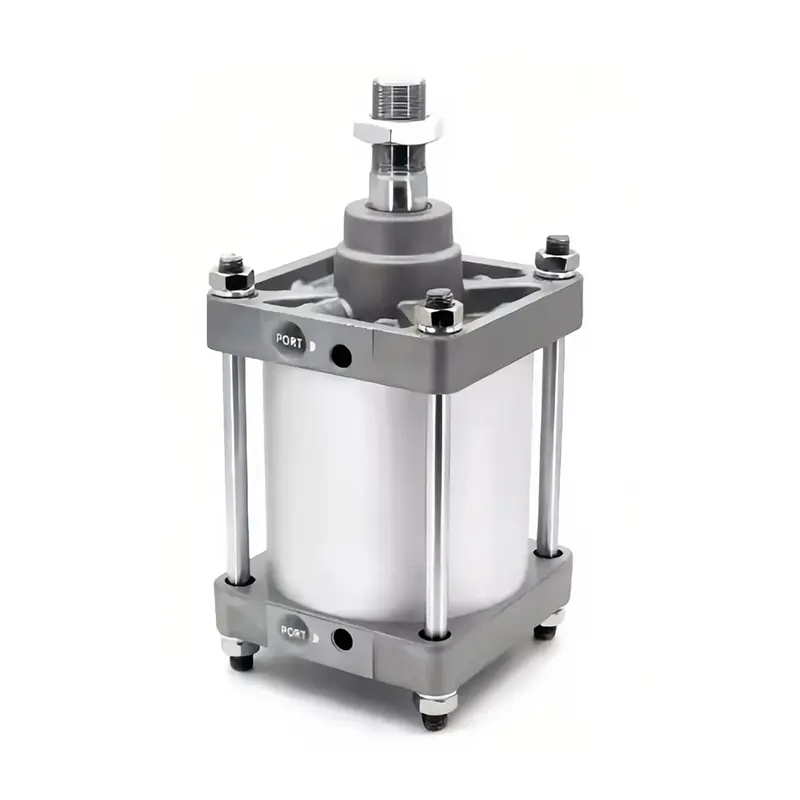
A pneumatic actuator is a device that converts compressed air energy into mechanical motion.
Depending on its design, it can generate:
- Linear motion (straight-line movement)
- Rotary motion (angular rotation)
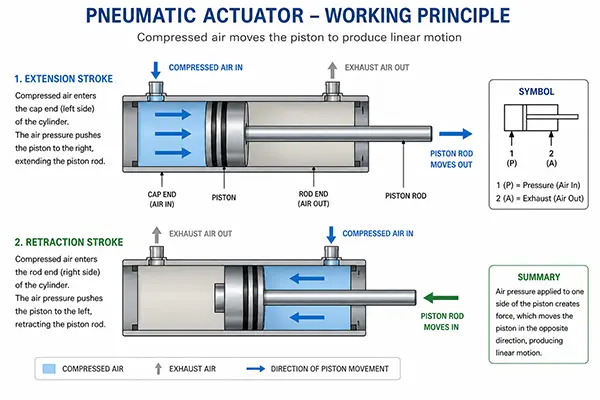
In simple terms, compressed air enters a chamber, builds pressure, and pushes a piston, vane, or diaphragm to create controlled movement.
Because they use air instead of oil or electric motors, pneumatic actuators are especially popular in environments where:
- High speed is required
- Repetitive motion is needed
- Cost control is important
- Spark-free operation is necessary
How Pneumatic Actuators Work
The working principle is based on a simple physical formula:
Force = Pressure × Effective Area
When compressed air (typically 0.4–0.8 MPa / 4–8 bar in most factories) enters the actuator chamber:
- Pressure builds inside the cylinder
- The piston or vane moves
- Mechanical motion is generated
A standard pneumatic system includes:
- Air compressor
- FRL unit (Filter, Regulator, Lubricator)
- Directional control valve
- Actuator
Proper air treatment is critical. Clean, dry, regulated air significantly increases service life.
Main Types of Pneumatic Actuators
Understanding the different types of pneumatic actuators helps ensure correct selection and long-term reliability.
1️⃣ Linear Pneumatic Actuators (Air Cylinders)
Linear cylinders are the most common type used in industrial automation.
a) Single-Acting Cylinders
- Air pressure drives motion in one direction
- Spring returns piston to original position
- Lower air consumption
Best for:
Clamping, ejecting, light positioning tasks
b) Double-Acting Cylinders
- Air pressure controls both forward and return strokes
- Higher force output
- Better speed control
Ideal for:
Assembly lines
Packaging equipment
Material handling systems
Double-acting cylinders dominate modern automation because they provide consistent performance in high-cycle operations.
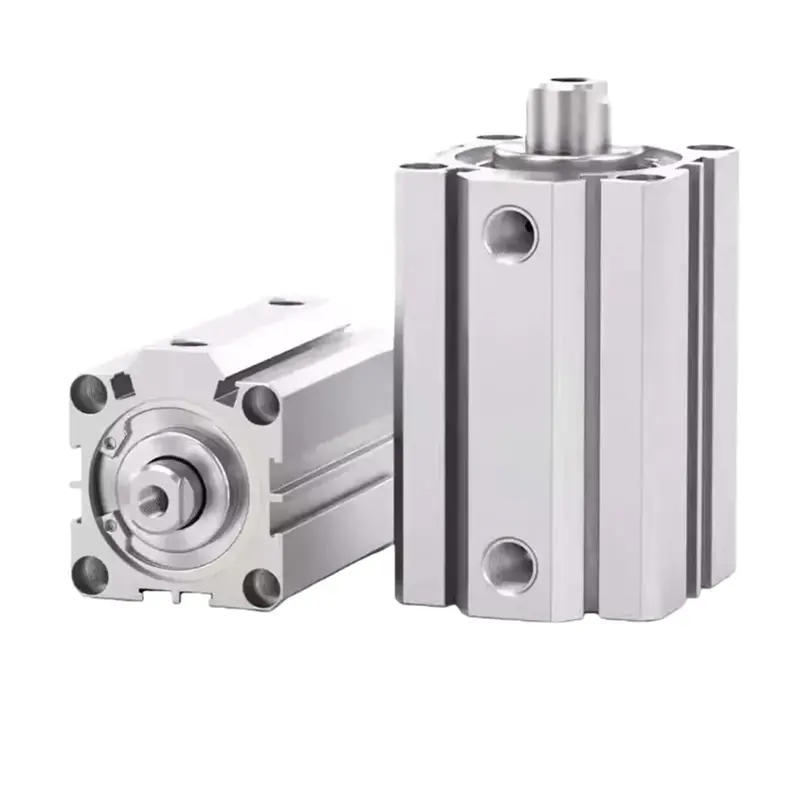
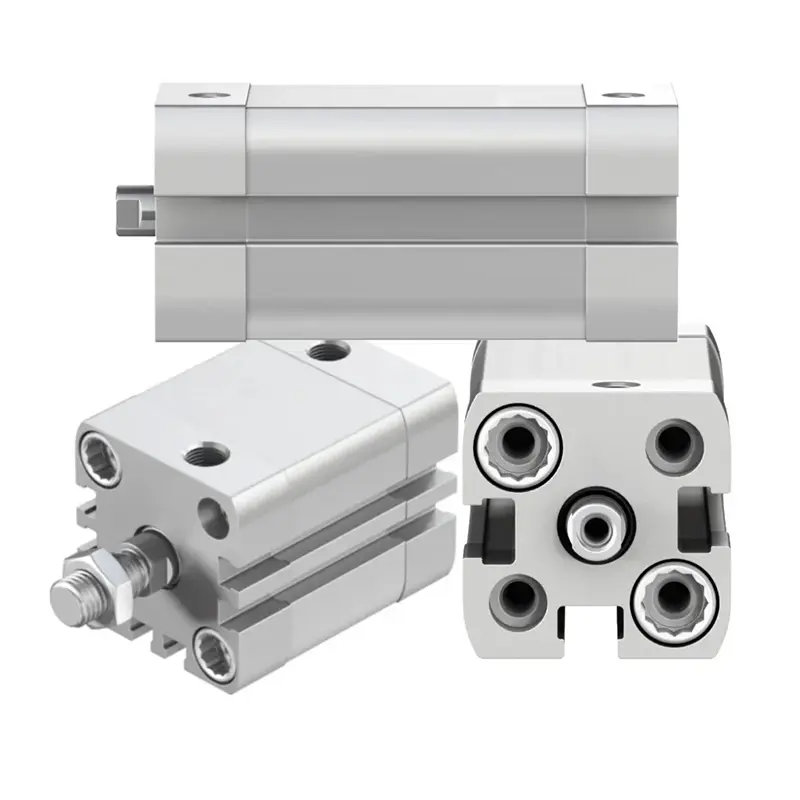
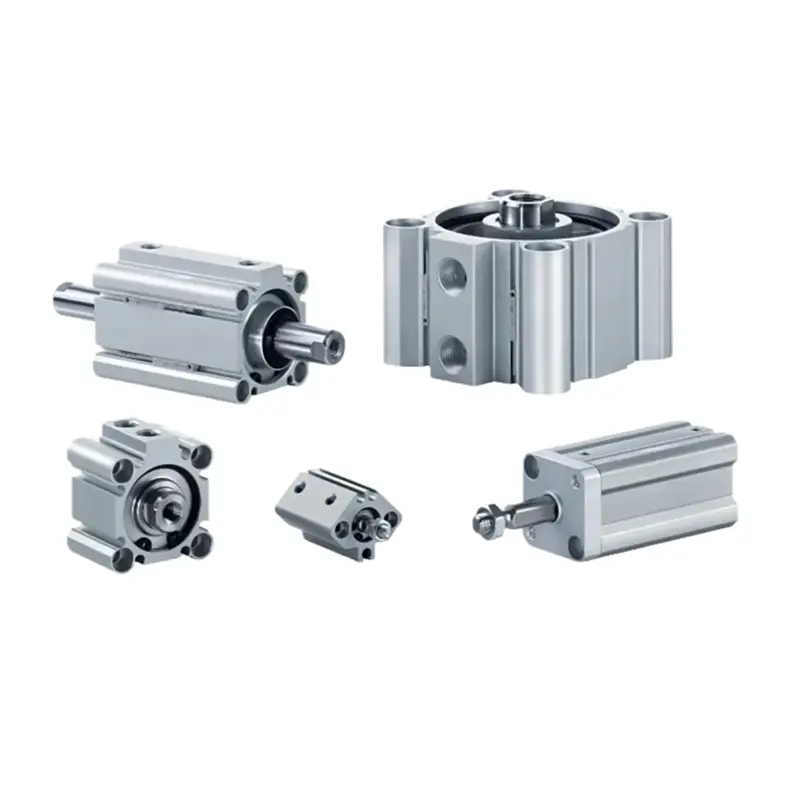
c) Compact Cylinders
- Shorter installation length
- Designed for limited space environments
Common in robotics and automated workstations.
2️⃣ Rotary Pneumatic Actuators
Rotary actuators convert compressed air into angular motion.
a) Vane-Type Rotary Actuators
- Internal vane rotates inside chamber
- Typically 90° to 180° rotation
- Smooth motion
Used in light-duty rotation applications.
b) Rack and Pinion Actuators
- Linear piston motion drives gear rotation
- Higher torque output
- Better precision
Widely used for valve automation and indexing systems.
3️⃣ Pneumatic Grippers (End Effectors)
Grippers are specialized pneumatic actuators designed for object handling.
Types include:
- Parallel grippers
- Angular grippers
- Three-finger grippers
Common in:
- Pick-and-place systems
- Electronics assembly
- Food processing automation
4️⃣ Diaphragm Actuators
Instead of a piston, these use a flexible diaphragm.
Advantages:
- High sensitivity
- Excellent for low-pressure control
- Good sealing performance
Typically used in valve control and process industries.
Pneumatic vs Electric vs Hydraulic Actuators
| Feature | Pneumatic | Electric | Hydraulic |
|---|---|---|---|
| Speed | High | Medium | Medium |
| Force Output | Moderate | Moderate | Very High |
| Precision | Moderate | High | High |
| Initial Cost | Low | High | High |
| Maintenance | Low | Medium | High |
| Cleanliness | Excellent | Excellent | Risk of oil leakage |
Conclusion:
Pneumatic actuators are ideal for high-speed, repetitive, and cost-sensitive applications, while electric systems are preferred for precision positioning.
How to Select the Right Pneumatic Actuator
Choosing the correct actuator directly impacts machine performance and operating cost.
Determine Motion Type
→ Use a Pneumatic Cylinder
→ Use a Rotary Actuator
Calculate Required Force
Example:
- Bore diameter = 50 mm
- Pressure = 0.6 MPa
Effective piston area:
A = π × (0.025²) ≈ 0.00196 m²
Force calculation:
Force = 0.6 × 10⁶ × 0.00196 ≈ 1176 N
This calculation ensures the actuator can handle the required load.
Consider Operating Environment
→ Stainless Steel Option
→ Enhanced Sealing
→ Oil-Free Design
Evaluate Air Consumption
Improper sizing can significantly increase compressed air cost. In high-cycle applications, energy efficiency should always be considered during actuator selection.
Common Mistakes When Choosing Pneumatic Actuators
Many buyers encounter issues such as:
- Undersized bore leading to insufficient force
- Excessive air consumption
- Poor sealing causing short service life
- Ignoring mounting compatibility
- Choosing based only on price
Working with a professional pneumatic actuator manufacturer reduces these risks.
Industrial Applications of Pneumatic Actuators
Pneumatic actuators are widely used in:
- Industrial automation systems
- Packaging machinery
- Automotive manufacturing
- Food and beverage processing
- Medical and cleanroom equipment
- Valve control systems
Their reliability and simplicity make them a cornerstone of modern production lines.
Why Industrial Buyers Choose CHDAC
At CHDAC, we understand that pneumatic actuators are not just components — they are critical to production uptime.
We provide:
- Full range of pneumatic cylinders and rotary actuators
- Custom bore and stroke options
- High-cycle sealing systems
- Corrosion-resistant materials
- OEM & ODM manufacturing support
- Strict quality control
- Fast global delivery
Our engineering team supports customers from selection to installation, ensuring optimal performance and long service life.
If you are sourcing pneumatic actuators for automation equipment or industrial machinery, our team is ready to provide technical consultation and competitive quotations.
FAQ
Double-acting pneumatic cylinders are the most widely used due to their balanced performance and durability.
Most industrial systems operate between 0.4–0.8 MPa (4–8 bar).
They are highly efficient for high-speed repetitive motion, but system design and air leakage control significantly affect overall efficiency.
High-quality actuators can achieve millions of cycles with proper air treatment and maintenance.
Final Thoughts
Pneumatic actuators remain one of the most practical and cost-effective motion control solutions in industrial automation.
By understanding the different types, selection criteria, and engineering considerations, buyers can improve reliability, reduce operating costs, and extend equipment lifespan.
If you are looking for a reliable pneumatic actuator manufacturer with strong engineering support, CHDAC is ready to assist.
Contact our team today to discuss your project requirements.