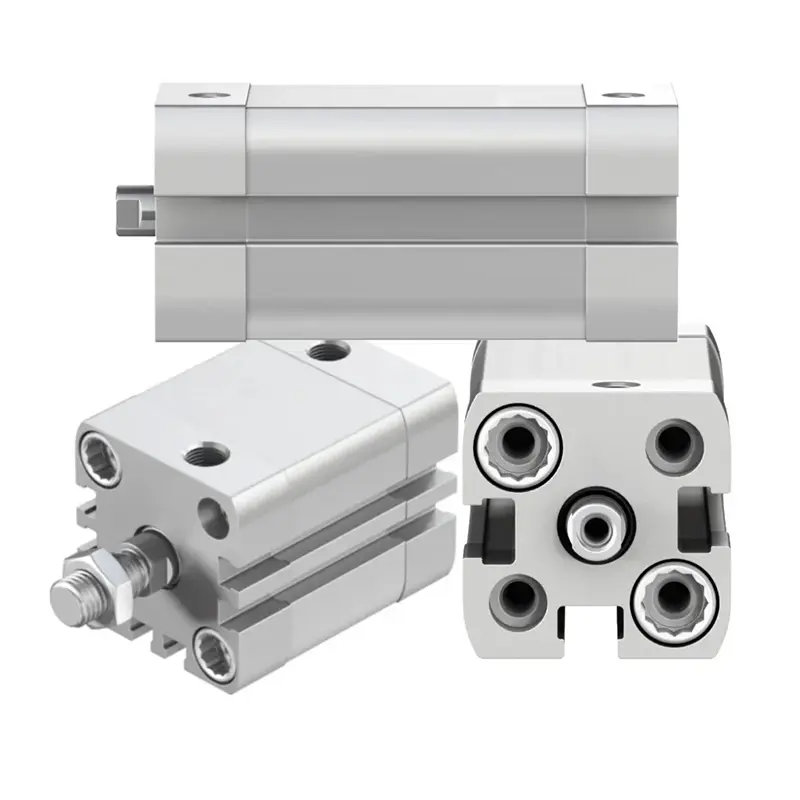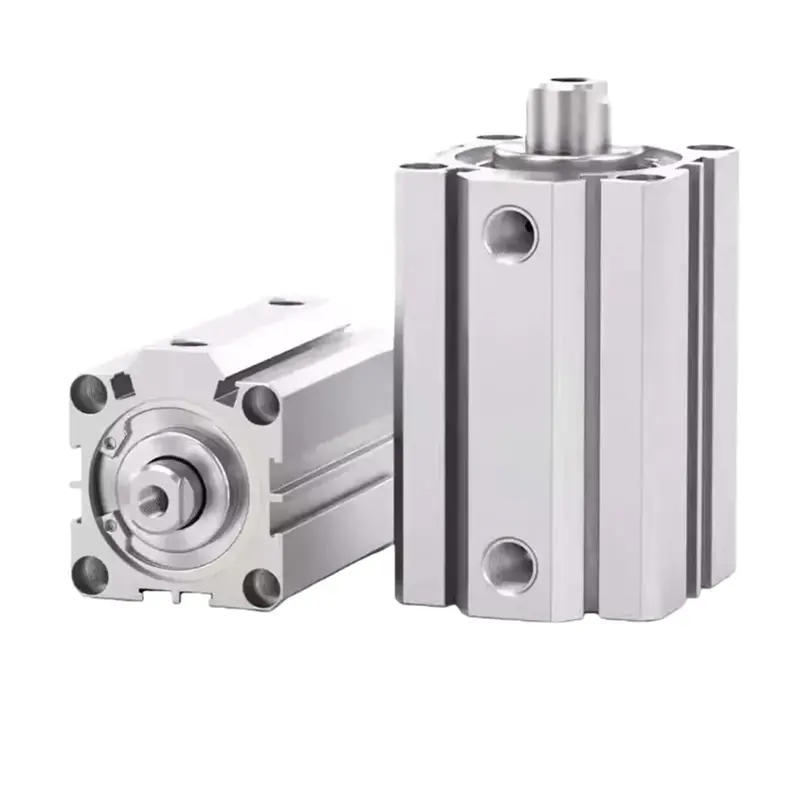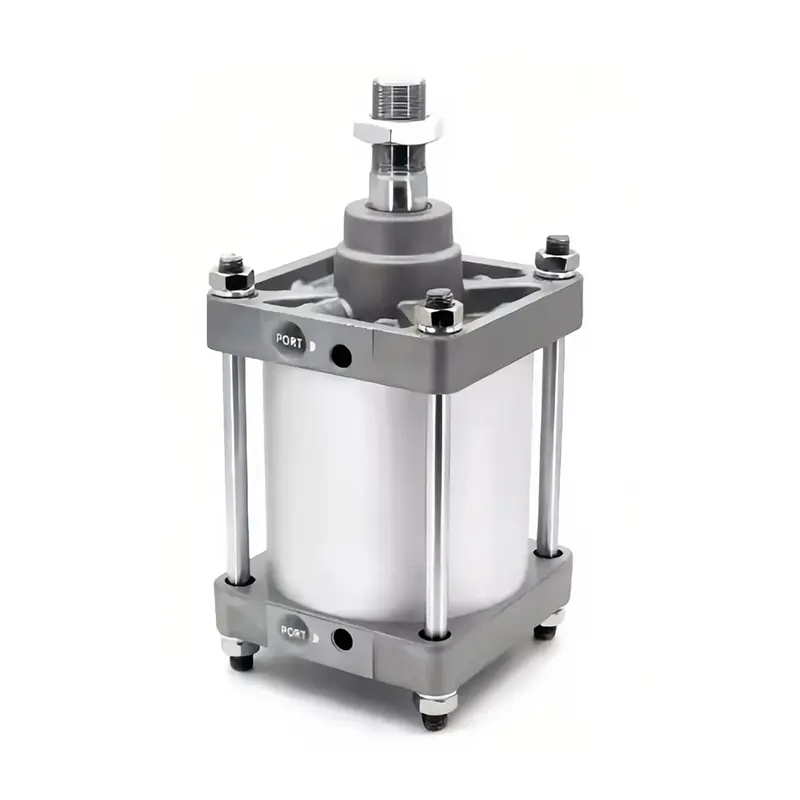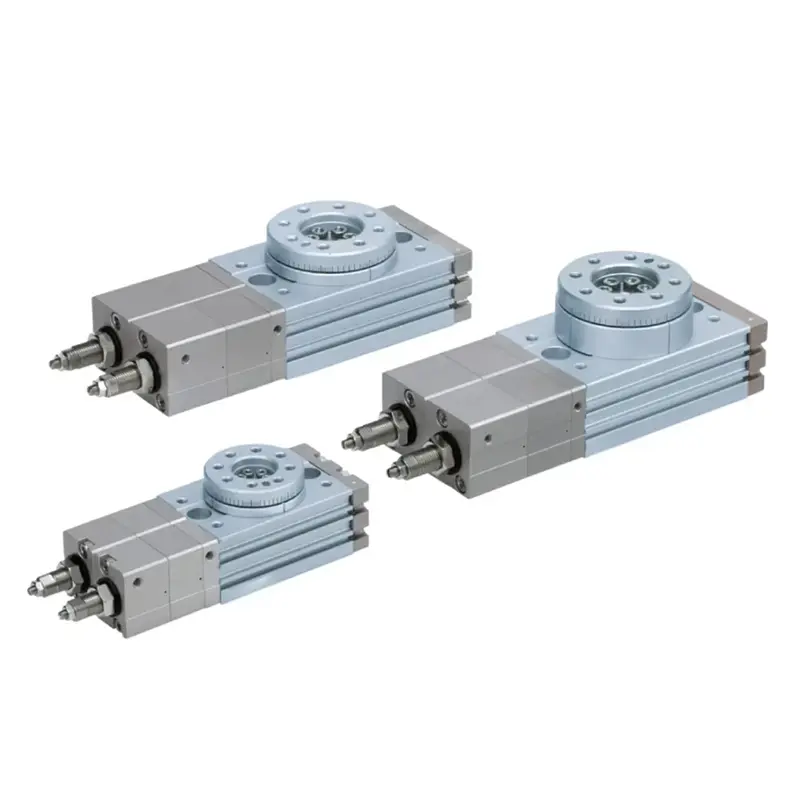
Air cylinders are one of the main types of pneumatic actuators; they are widely utilized for providing motion with compressed air. Among various types of pneumatic cylinders, single acting pneumatic cylinders and double acting pneumatic cylinders are mainly used in different automation and manufacturing activities.
In the real world, where pneumatic system design is concerned, the choice between an adequately designed single acting cylinder or a double acting cylinder is far less about which cylinder configuration can be considered “better” overall.
Within the current guide, the CHDAC offers a practical and engineering-style comparison that OEMs, system integrators, and industrial purchasers should find helpful in selecting the correct cylinder for a specific application.
What Are Air Cylinders?
An air cylinder, also known as a pneumatic cylinder, is a mechanical device that requires air for the movement and generation of force in a linear motion. Following the ISO standards and industrial practices, air cylinders are used in an automation system because they provide:
Simple and Robust Structure
High operational reliability
Clean operation without hydraulic oil
Cost-effective Motion Control
They are often used in the packaging machine, assembly machine, material handling system, food processing equipment, and production machine.
What Is a Single Acting Cylinder?
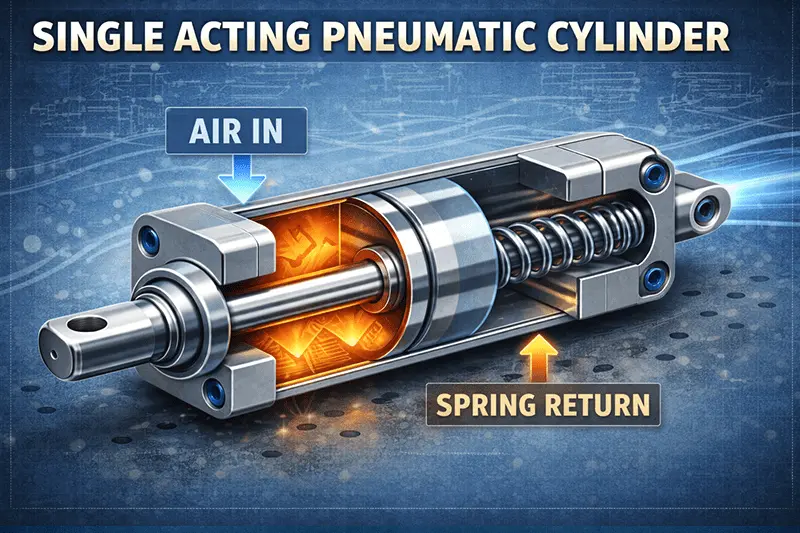
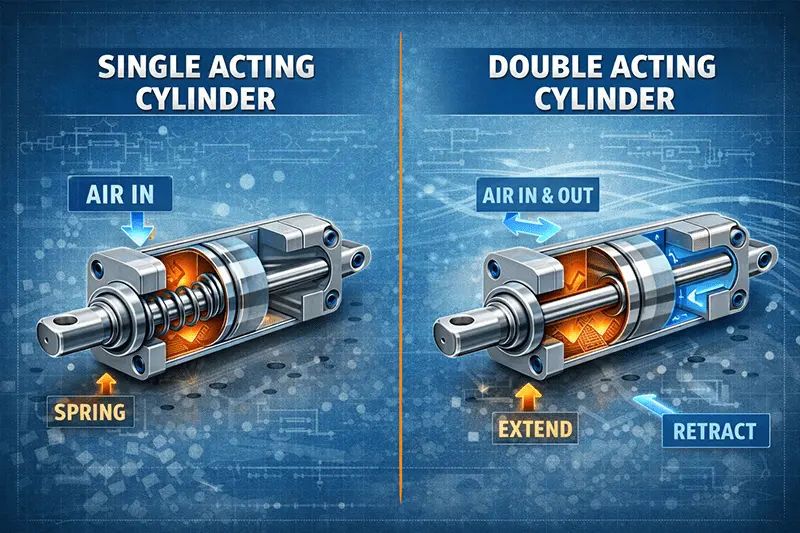
A single acting cylinder uses compressed air to move the piston in one direction only. The return stroke is achieved through an internal spring or an external force such as gravity or load weight.
How a Single Acting Cylinder Works
- Compressed air enters the cylinder chamber.
- Air pressure pushes the piston to extend.
- When air is released, the spring force returns the piston to its original position.
Key Characteristics
- One air port
- Spring or external-force return
- Typically shorter stroke lengths due to spring force limitations
- Reduced output force compared to double acting cylinders
- Simple pneumatic circuit design
Typical Applications
Single acting cylinders are well suited for applications where motion is required in only one direction or where a fail-safe return position is critical, such as:
- Clamping and holding mechanisms
- Part ejection systems
- Pressing or light stamping operations
- Valve actuation
- Safety return systems
In many automation designs, single acting cylinders are selected specifically because they automatically return to a safe position when air pressure is lost, making them suitable for safety-critical functions.
What Is a Double Acting Cylinder?
【img】
alt: Double acting air cylinder showing air supply on both sides of piston
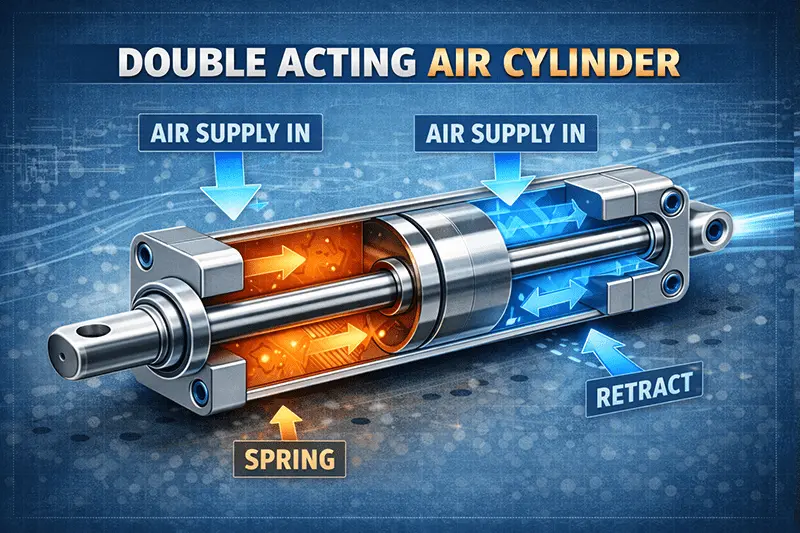
A double acting cylinder uses compressed air to move the piston in both extension and retraction directions. Air pressure is alternately supplied to each side of the piston, allowing full control of motion.
How a Double Acting Cylinder Works
- Compressed air enters one chamber to extend the piston.
- Air in the opposite chamber is exhausted.
- The air flow is reversed to retract the piston.
Key Characteristics
- Two air ports
- No internal spring
- Full and consistent force in both directions
- Suitable for short to very long strokes
- Precise speed and position control
Typical Applications
Double acting cylinders are the standard choice in applications requiring continuous, controlled motion, including:
- Automated assembly lines
- Pick-and-place systems
- Conveying and lifting equipment
- Packaging and labeling machinery
- Industrial automation and robotic systems
For high-cycle and precision-driven systems, double acting cylinders offer superior control and long-term stability.
Single Acting vs Double Acting Cylinder: Side-by-Side Comparison
| Feature | Single Acting Cylinder | Double Acting Cylinder |
|---|---|---|
| Motion Control | One direction only | Two directions |
| Air Supply | One port | Two ports |
| Return Method | Spring or external force | Compressed air |
| Output Force | Lower (spring reduces usable force) | Higher and consistent |
| Stroke Length | Typically short | Short to very long |
| Control Precision | Limited | High |
| Air Consumption | Lower per cycle | Higher per cycle |
| System Complexity | Simple | Moderate |
| Initial Cost | Lower | Higher |
| Typical Use | Simple, safety-return functions | Continuous and precise motion |
Application-Driven Selection: Which One Should You Choose?
The correct cylinder choice depends on how the actuator is expected to behave in actual operation, not just price or size.
Choose a Single Acting Cylinder If:
- Motion is required in only one direction
- Load is light to moderate
- Stroke length is short
- A fail-safe return position is required
- System simplicity and low air consumption are priorities
Example:
A clamping unit that must automatically release when air pressure is lost.
Choose a Double Acting Cylinder If:
- Controlled motion is required in both directions
- Precise positioning or speed control is needed
- Load is medium to heavy
- Long stroke length is required
- The system operates at high cycle frequency
Example:
An automated packaging line with continuous push–pull motion.
Quick Selection Summary for Engineers
If the application requires simple one-direction motion with a reliable return position, a single acting cylinder is usually the most practical solution.
For systems involving continuous operation, higher loads, or precise motion control, a double acting cylinder provides better performance and long-term reliability.
Market Trends and Industry Background
With the ongoing expansion of factory automation and cost-sensitive motion control solutions, pneumatic systems continue to play an important role in modern manufacturing. Industries such as food processing, pharmaceuticals, packaging, and general automation rely heavily on air cylinders for their simplicity and durability.
While double acting cylinders dominate high-automation environments, single acting cylinders remain essential in compact, safety-focused, and cost-sensitive applications.
Manufacturers like CHDAC continue to improve sealing technology, materials, and machining accuracy to extend service life and reduce air leakage for both cylinder types.
Technical Considerations When Selecting Air Cylinders
Before finalizing a cylinder design, engineers should evaluate:
- Required output force (N)
- Operating pressure range (typically 0.1–1.0 MPa)
- Stroke length
- Mounting style
- Cycle speed and frequency
- Environmental conditions (dust, moisture, temperature)
International standards such as ISO 6431 and ISO 15552 are commonly followed to ensure dimensional compatibility and interchangeability.
Why Choose CHDAC Air Cylinders?
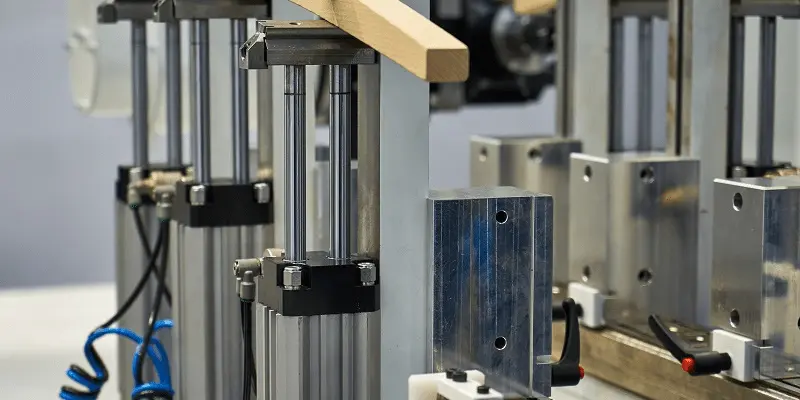
As a professional pneumatic components manufacturer, CHDAC supplies both single acting and double acting cylinders designed for real industrial duty.
CHDAC air cylinders feature:
- Stable performance under continuous operation
- ISO-compliant dimensions for easy replacement
- High-quality seals and anodized aluminum barrels
- Support for OEM and custom applications
- Consistent quality trusted by global automation customers
FAQ
1. Is a single acting cylinder the same as a standard air cylinder?
No. A single acting cylinder is one type of air cylinder. Many “standard cylinders” used in automation are actually double acting designs.
2. Which consumes less compressed air: single acting or double acting cylinder?
A single acting cylinder generally consumes less air per cycle because compressed air is used in only one direction.
3. Can a double acting cylinder replace a single acting cylinder?
In most cases, yes. However, this may increase system cost and air consumption if bidirectional force is not required.
4. Are single acting cylinders less durable?
Not necessarily. Durability depends on materials, seal quality, manufacturing accuracy, and operating conditions.
5. Which cylinder type is better for high-speed automation?
Double acting cylinders are better suited for high-speed and high-frequency applications due to controlled motion in both directions.
Conclusion
Both single acting cylinders and double acting cylinders play essential roles in pneumatic automation systems. Selecting the right type depends on motion requirements, load conditions, safety behavior, and system design goals.
By understanding the functional differences between these two cylinder types, engineers and buyers can optimize performance, reliability, and total system cost.
For application-specific recommendations or OEM pneumatic solutions, CHDAC provides professional technical support and a complete range of industrial air cylinders.