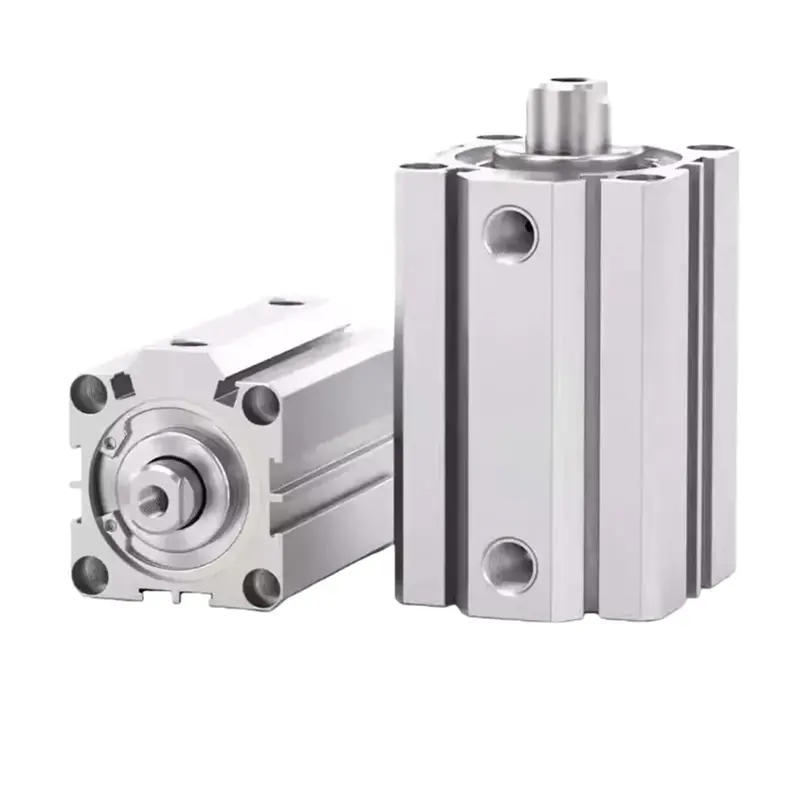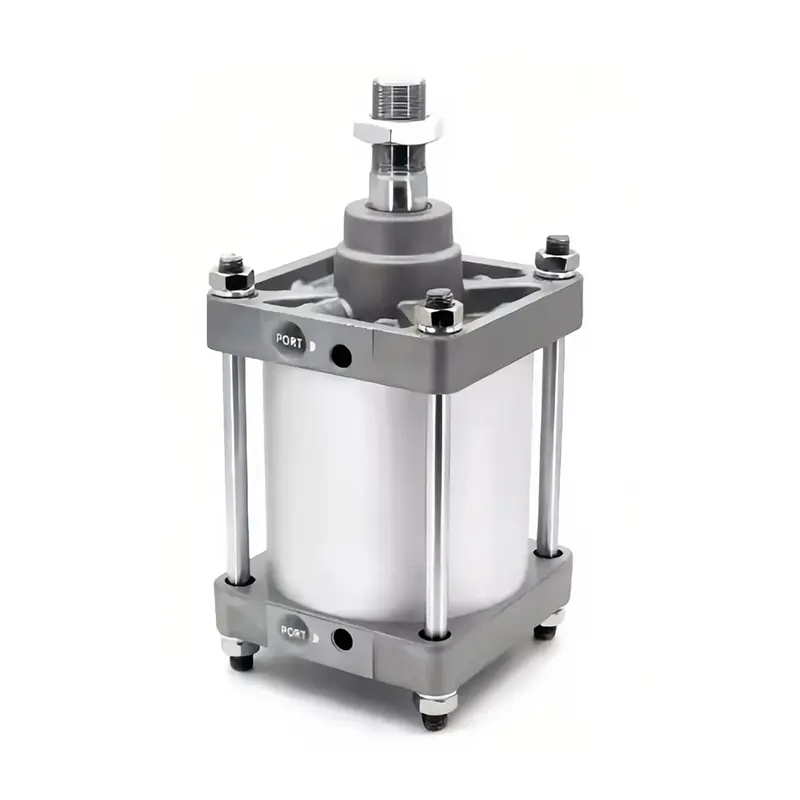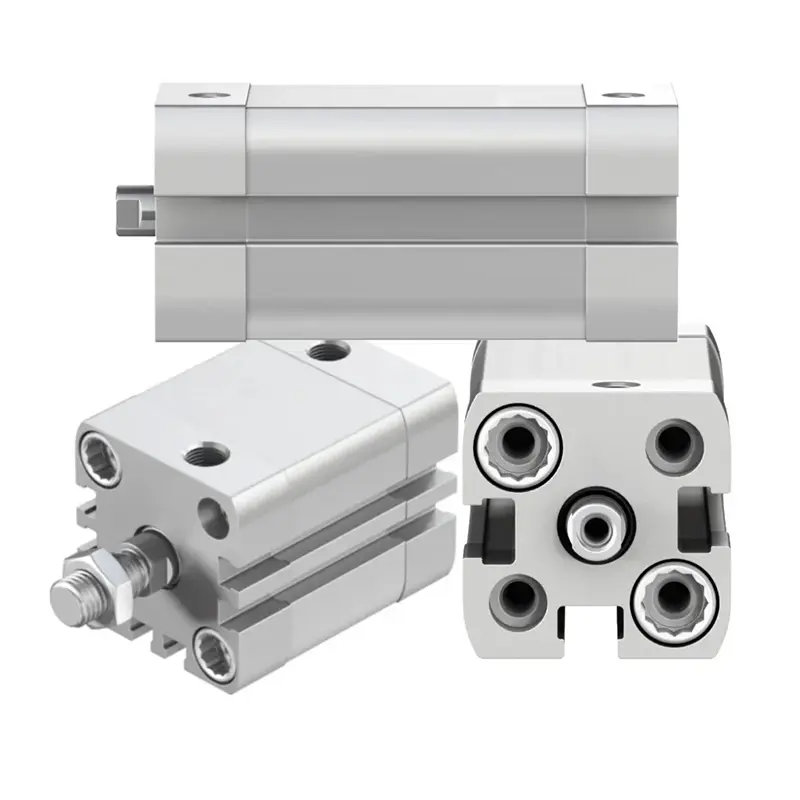
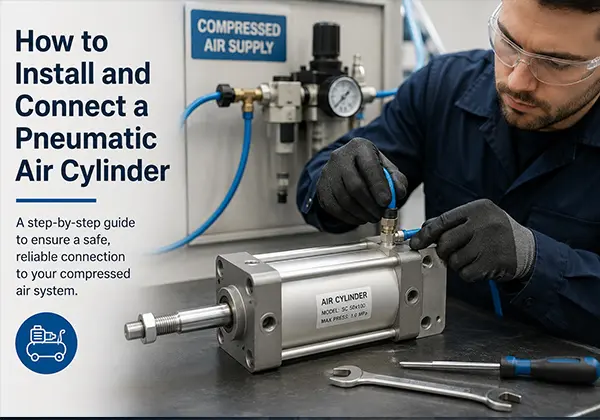
Air cylinders are among the most widely used actuators in industrial automation. They convert compressed air into linear motion for pushing, pulling, lifting, clamping, positioning, and material handling applications.
While pneumatic cylinders are known for their reliability and simplicity, improper installation can lead to air leaks, unstable motion, excessive air consumption, premature seal wear, and reduced equipment lifespan.
Whether you are installing a new pneumatic system, replacing an existing cylinder, or troubleshooting performance issues, understanding the correct connection process is essential for safe and efficient operation.
In this guide, you’ll learn:
- What an air cylinder is
- Components required for installation
- How to connect a pneumatic cylinder step by step
- Common connection mistakes
- Troubleshooting techniques
- Expert installation recommendations from CHDAC engineers
Quick Answer – How Do You Connect an Air Cylinder?
To connect an air cylinder correctly:
Mount the cylinder securely.
Install an FRL unit.
Select the correct directional valve.
Connect pneumatic tubing.
Install flow control valves.
Gradually pressurize the system.
Check for leaks and operation.
The typical connection sequence is:
Air Compressor
↓
FRL Unit
↓
Solenoid Valve
↓
Flow Controls
↓
Air Cylinder
Proper alignment, clean compressed air, and correct valve sizing are critical for maximizing cylinder performance and service life.
What Is an Air Cylinder?
Image Alt: Internal structure of a pneumatic cylinder showing piston rod piston barrel seals and air ports
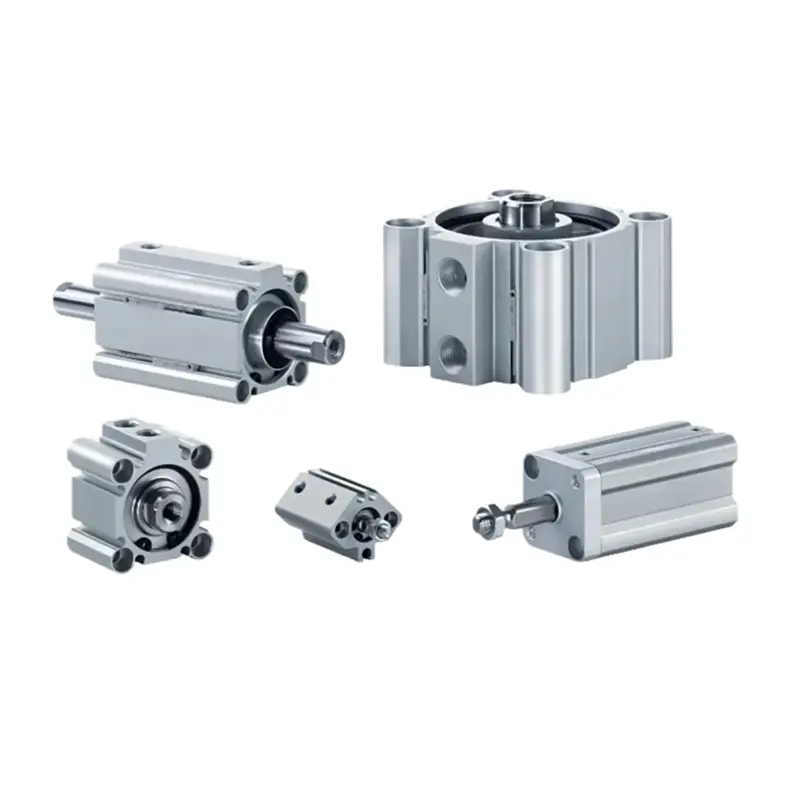
An air cylinder, also known as a pneumatic cylinder, is a mechanical actuator that converts compressed air energy into linear motion.
- Cylinder barrel
- Piston
- Piston rod
- End caps
- Air ports
- Seals and wear rings
When compressed air enters the cylinder chamber, pressure acts on the piston surface and creates force, causing the piston rod to extend or retract.
Advantages of Pneumatic Cylinders
Compared with hydraulic and electric actuators, pneumatic cylinders offer:
These advantages make pneumatic cylinders one of the most widely used motion-control devices in industrial automation.
Components Required to Connect an Air Cylinder
Before installation, gather all necessary pneumatic components.
Before installation, gather all necessary pneumatic components to ensure reliable system performance, efficient airflow control, and long service life.
Air Cylinder
Select the cylinder type according to your application requirements.
Different cylinder designs provide varying levels of force, stroke length, stability, and installation flexibility.
Directional Control Valve
Directional valves control airflow into and out of the cylinder, determining extension and retraction movements.
| Valve Type | Typical Application |
|---|---|
| 3/2 Valve | Single-Acting Cylinders |
| 5/2 Valve | Double-Acting Cylinders |
| 5/3 Valve | Intermediate Position Applications |
FRL Unit
An FRL unit prepares compressed air before it enters the pneumatic system.
- Removing moisture
- Filtering contaminants
- Stabilizing air pressure
- Protecting pneumatic components
Many modern cylinders operate without lubrication, but filtration and pressure regulation remain essential.
Pneumatic Tubing
Common tubing materials include:
Proper tubing selection helps reduce pressure loss and maintain system response speed.
Pneumatic Fittings
Common fitting types include:
High-quality fittings help prevent air leakage and improve overall system efficiency.
Air Compressor
The compressor provides compressed air for the entire pneumatic system.
Most industrial pneumatic systems operate within this pressure range for reliable cylinder performance.
Understanding Air Cylinder Ports
The connection method depends on whether the cylinder is single-acting or double-acting.
Single-Acting Air Cylinder

Key Features
- One working air port
- Internal spring return mechanism
Operation
- Compressed air extends the piston rod.
- When air pressure is removed, the spring automatically retracts the rod.
Double-Acting Air Cylinder

Cylinder Ports
- Port A – Extension side
- Port B – Retraction side
Operation
Compressed air alternately enters each chamber to control extension and retraction of the piston rod.
Benefits
- Higher force output
- Better speed control
- Improved positioning accuracy
Step-by-Step Guide to Connecting an Air Cylinder
Step 1 – Mount the Cylinder Correctly
Choose an appropriate mounting style:
- Foot mount
- Front flange
- Rear flange
- Clevis mount
- Trunnion mount
Before tightening hardware, verify:
✓ Proper alignment
✓ No side loading
✓ Adequate stroke clearance
✓ Stable mounting support
Misalignment is one of the leading causes of rod seal failure and premature wear.
Step 2 – Install the FRL Unit
The recommended arrangement is:
Air Compressor
↓
FRL Unit
↓
Control Valve
↓
Air Cylinder
Benefits include:
- Moisture removal
- Particle filtration
- Stable operating pressure
- Extended component lifespan
Step 3 – Connect the Directional Control Valve
For Single-Acting Cylinders
Use a 3/2-way valve.
Port functions:
- P = Pressure supply
- A = Cylinder connection
- R = Exhaust
For Double-Acting Cylinders
Use a 5/2-way valve.
Port functions:
- P = Air supply
- A = Extend port
- B = Retract port
- EA / EB = Exhaust ports
Always verify valve markings before installation.
Step 4 – Connect Pneumatic Tubing
Image Alt:
Pneumatic tubing connected between FRL unit solenoid valve and air cylinder
Best practices:
- Fully insert tubing into push-in fittings
- Avoid sharp bends
- Minimize tubing length
- Prevent tube twisting
Improper tubing installation can reduce cylinder speed and create unnecessary pressure loss.
Step 5 – Install Flow Control Valves
Flow control valves regulate cylinder speed.
Benefits:
- Smoother movement
- Reduced end-of-stroke impact
- Better process consistency
For most industrial applications, meter-out control is recommended because it provides more stable motion.
Step 6 – Gradually Pressurize the System
Before applying full pressure:
✓ Confirm all fittings are secure
✓ Verify valve operation
✓ Check cylinder alignment
✓ Ensure tubing connections are complete
Gradually increase pressure while observing system performance.
Step 7 – Check for Air Leaks
Leak detection methods include:
- Soap solution testing
- Ultrasonic leak detectors
- Pressure-drop monitoring
Inspect:
- Cylinder ports
- Fittings
- Tubing
- Valve connections
Even small leaks can significantly increase compressed air costs over time.
Typical Air Cylinder Connection Diagrams
Single-Acting Cylinder Connection
Air Compressor
↓
FRL Unit
↓
3/2 Valve
↓
Single-Acting Cylinder
Double-Acting Cylinder Connection
Air Compressor
↓
FRL Unit
↓
5/2 Solenoid Valve
↙ ↘
Port A Port B
↓ ↓
Double-Acting Cylinder
This setup is commonly used in:
- Packaging machinery
- Assembly lines
- Material handling systems
- Food processing equipment
- Automotive manufacturing
How to Size an Air Cylinder Before Installation
Proper cylinder sizing is critical for reliable operation.
Cylinder Force Formula
Force = Pressure × Effective Piston Area
Example:
Cylinder Bore = 50 mm
Operating Pressure = 0.6 MPa
Output Force ≈ 1178 N
Factors to Consider
When selecting cylinder size, consider:
- Required force
- Stroke length
- Load direction
- Operating pressure
- Cycle frequency
An undersized cylinder may stall under load, while an oversized cylinder increases air consumption and operating costs.
Expert Installation Tips from CHDAC Engineers
Based on years of field experience, CHDAC engineers recommend:
- Install flow controls directly at cylinder ports.
- Keep tubing lengths as short as possible.
- Use meter-out speed control.
- Verify rod alignment before pressurizing.
- Perform leak inspections regularly.
- Install silencers in noisy environments.
- Inspect seals and fittings periodically.
Common Air Cylinder Connection Mistakes
Reverse movement, control issues and safety hazards.
Seal damage, corrosion and valve sticking.
Pressure loss and reduced efficiency.
Bent rods and premature wear.
Air Cylinder Troubleshooting Guide
| Problem | Possible Cause | Solution |
|---|---|---|
| Cylinder will not move | No air supply | Check compressor and regulator |
| Slow movement | Low pressure | Increase regulated pressure |
| Jerky motion | Contaminated air | Replace filter element |
| Excessive noise | High exhaust flow | Install muffler |
| Air leakage | Loose fitting | Tighten or replace fitting |
| Cylinder stalls under load | Insufficient force | Increase cylinder bore size |
| Uneven movement | Incorrect flow control setting | Re-adjust speed controller |
Application Example – Packaging Machine Cylinder Installation
Typical configuration:
Cylinder Bore: 63 mm
Stroke: 100 mm
Pressure: 0.6 MPa
Cycle Rate: 20 cycles/min
System layout:
Air Compressor
↓
FRL Unit
↓
5/2 Solenoid Valve
↓
Flow Controls
↓
Double-Acting Cylinder
This configuration is commonly used for carton positioning and product handling applications.
Why Proper Air Cylinder Installation Matters
Correct installation helps achieve:
Need Help Selecting the Right Air Cylinder?
Choosing the correct cylinder bore, stroke length, valve size, and operating pressure is critical for achieving reliable pneumatic performance.
CHDAC engineers can help you:
✓ Select the right cylinder type
✓ Calculate required output force
✓ Match valves and FRL units
✓ Optimize compressed air consumption
✓ Design complete pneumatic circuits
✓ Recommend solutions for OEM automation projects
Contact CHDAC today for free technical consultation and customized pneumatic solutions.
FAQ
How many ports does a double-acting air cylinder have?
A double-acting cylinder typically has two working ports: one for extension and one for retraction.
Should an air cylinder be connected directly to an air compressor?
No. An FRL unit and directional control valve should always be installed between the compressor and cylinder.
What pressure is required for an air cylinder?
Most industrial pneumatic cylinders operate between 0.4 MPa and 0.7 MPa, depending on the application.
Why is my air cylinder moving slowly?
Possible causes include:
- Low pressure
- Air leaks
- Undersized tubing
- Incorrect flow control settings
- Contaminated valves
Do I need a flow control valve?
Yes. In most applications, flow control valves allow speed adjustment and help reduce impact forces.
What is the difference between a single-acting and double-acting cylinder?
A single-acting cylinder uses compressed air in one direction and a spring return. A double-acting cylinder uses compressed air for both extension and retraction, providing greater force and control.
Conclusion
Knowing how to connect an air cylinder correctly is essential for achieving reliable pneumatic system performance. Proper installation of the cylinder, FRL unit, control valve, tubing, fittings, and flow controls ensures smooth operation, energy efficiency, and long-term durability.
By following the best practices outlined in this guide, engineers and maintenance teams can reduce downtime, improve productivity, and extend equipment lifespan.
As a professional pneumatic component manufacturer, CHDAC provides high-quality air cylinders, FRL units, solenoid valves, pneumatic fittings, and complete automation solutions for OEMs and industrial users worldwide.